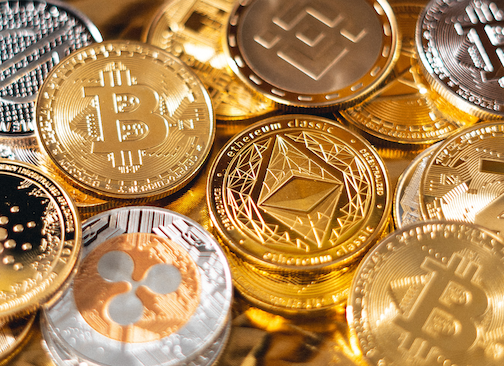
Crypto tokens are digital assets created on a blockchain platform using smart contracts. They represent a particular unit of value or asset, which could be anything from currency, shares in a company, or even an access token for a particular service.
Tokens do not belong to a specific blockchain network; instead, they are governed by a set of rules and protocols that dictate their behavior and use. These rules and protocols are coded into the smart contracts or software programs that run on the blockchain network, ensuring that transactions and token movements are transparent, secure, and tamper-proof.
Tokens are designed to represent a particular value or asset and are usually interchangeable with other tokens of the same type. This makes them highly liquid and easy to trade or exchange, much like individual U.S. dollar notes with the same face value.
Token vs Coin
A coin typically refers to a cryptocurrency with its own blockchain and can function as a digital currency or a store of value. Examples of coins include Bitcoin and Litecoin.
On the other hand, a token is a digital asset representing a specific utility or asset on a blockchain network. Tokens can have various use cases, such as providing access to a service or product, acting as a currency within a specific ecosystem, or representing ownership of a particular asset. Examples of tokens are Ethereum and Raindrop.
Tokens are digital assets stored on a blockchain and can be traded, just like traditional cryptocurrencies. They offer several benefits, including increased security, transparency, efficiency, lower transaction fees, and faster processing times.
In summary, tokens are digital assets that represent specific values, while coins are a type of cryptocurrency that can serve as a digital currency or a store of value.
Types of Tokens
There are various types of tokens, each with unique characteristics and purposes. Some of the most common types of crypto tokens include:
- Utility Tokens: These tokens have a specific use case and are typically built on a blockchain platform that provides a particular service. For example, an airline company could use a utility token to book flights, access travel rewards or loyalty programs, or pay for other services offered by the airline. Utility tokens have value because they are required to use the platform or service, and their value can increase as the platform gains popularity and demand grows. Examples of utility tokens include ETH (Ethereum) and Raindrop.
- Security Tokens: These tokens represent ownership in a company or asset and are designed to be used as a form of investment. They are subject to government regulations and intended to provide investors with returns through dividends, profits, or capital appreciation. Examples of security tokens include SPiCE and tZERO.
- Payment Tokens: These tokens function as a payment, similar to traditional currency. They can be used to purchase goods and services and can be traded on cryptocurrency exchanges. Examples of payment tokens include Ethereum and Ripple.
- Asset Tokens: These tokens represent ownership of a specific asset, such as real estate or gold. The underlying asset’s value backs them and can be traded on cryptocurrency exchanges. Examples of asset tokens include RealT and the Gold token, which represent ownership of physical gold.
- Reward Tokens: These tokens are given to users for performing specific actions or completing certain tasks on a platform. For example, a social media platform might reward users with tokens for creating engaging content or promoting the platform to their friends. These tokens are not necessary to use the platform, but can be exchanged for other rewards or services. Examples of reward tokens include AXS and BAT.
Importance of Tokens
One of the most innovative features of tokens is that no central authority controls the flow of funds, ensuring greater security and privacy for users. The decentralized blockchain system makes it impossible for any person or entity to manipulate it or steal funds.
In addition, tokens reduce the need for intermediaries, such as banks or payment processors, resulting in faster, more cost-effective transactions. With crypto tokens, users have complete control over their funds, enabling greater freedom and flexibility in managing their finances.
Like cryptocurrencies, tokens can be used at any time of day, from anywhere in the world with an internet connection, through blockchain and smart contract technologies.
The Rainfall Token and its Benefits
The Raindrop token is the native currency of Rainfall. It is the medium for value exchange between the data you share and the companies that want to know more about you from the insights Rainfall generates. The Raindrops you earn can be used or converted at any time to currencies you choose, such as USD or EUR.
As the Rainfall ecosystem grows and more individuals start earning and spending Raindrops, companies will have opportunities to create and integrate products and services into the Raindrop economy. Some examples could be:
- Sustainable Groceries: Rainfall could let you pay for groceries in Raindrops and offer various discounts on items, helping you reduce your daily expenses.
- Local Transport: Lyft or Uber for Rainfall, which accepts Raindrops as payment, could offer a discount on all rides, creating stronger incentives and greater buying power for your daily commutes.
- Travel Perks: Airbnb or Vrbo for Rainfall, which accepts Raindrops, could provide you with perks and deals on all your holiday stays, helping you save more money.
These partner companies could then spend the Raindrops you used. They have earned insights about customers like you within the Rainfall ecosystem, thereby increasing the Raindrop token supply and creating more economic value in the Rainfall economy.
Why are Token Economies Here to Stay
Token economies, if done responsibly and ethically, can revolutionize how we think about and participate in economic systems. With the rise of blockchain technology and cryptocurrencies, token economies offer a new way to create sustainable, equitable systems in which everyone who adds value benefits.
One of the key advantages of token economies is that they allow for the creation of decentralized, autonomous systems that are not controlled by any central authority. This means there is no need for intermediaries or middlemen, and transactions can be carried out quickly and efficiently.
Moreover, token economies can also help to reduce inequality by creating more opportunities for participation and enabling users to earn tokens for their contributions. This can be particularly beneficial for individuals and communities who are traditionally excluded from traditional centralized economic systems.
In addition, token economies have the potential to create more sustainable economic systems by incentivizing behaviors that benefit the environment or social welfare. For example, companies could use tokens to incentivize users to reduce their carbon footprint or to support social causes.
Overall, while token economies are still relatively new and in their early stages of development, they have the potential to become a powerful economic tool that can help build a more sustainable and equitable economy for everyone.
Conclusion
Like any other asset class, crypto tokens have advantages and disadvantages. They are often traded on exchanges and are subject to market volatility. Some crypto tokens have gained a negative reputation due to several factors, including fraudulent ICOs, Ponzi schemes, hacking attacks on crypto exchanges, and the use of cryptocurrencies for money laundering.
On the other hand, Rainfall tokens offer numerous advantages over traditional financial systems, including increased security, transparency, efficiency, and control. These innovative features can revolutionize how users create, manage, and exchange value.
Rainfall is a safe and easy way to earn money from your data. Most importantly, you aren’t required to contribute any monetary investment to earn Raindrop. Raindrops are designed to serve a specific purpose within a Rainfall platform, and their value is tied to the platform's adoption and use.
One of the primary benefits of Raindrop is that it provides a digital representation of assets that can be traded, bought, and sold on various exchanges. This creates a decentralized financial market, removing the need for intermediaries and reducing costs.